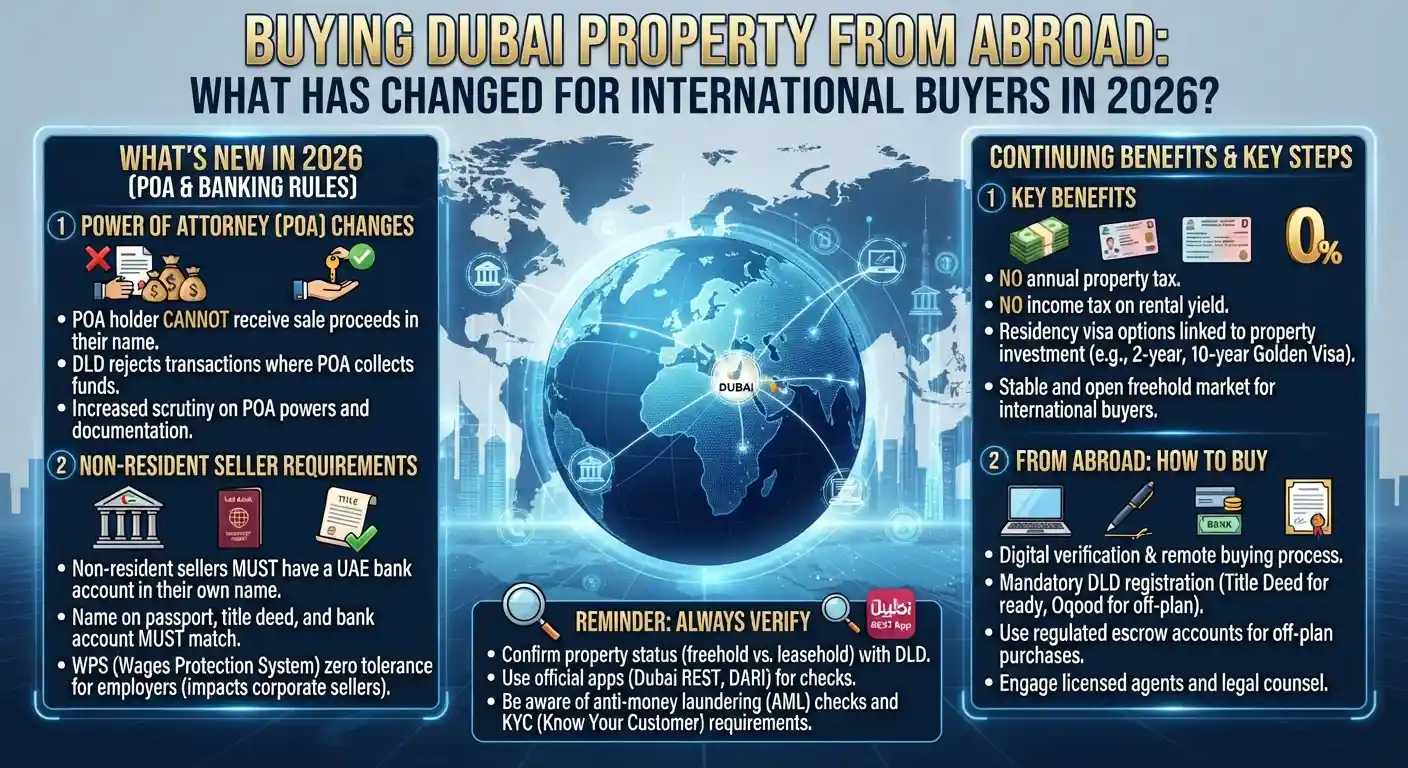
Dubai continues to attract international property buyers looking for residential homes, rental income opportunities and long-term investments. Over the years, the city has made several improvements to its real estate framework, digital services and property registration processes. In 2026, buying property from abroad has become more accessible in several ways, allowing overseas investors to explore opportunities without necessarily being physically present in the UAE.
However, international buyers still need to understand the purchasing process, financial requirements and legal considerations before making a decision.
- A More Digital Property Buying Experience
One of the notable developments in Dubai’s real estate market is the growing use of digital platforms. Buyers can now access property listings, review project information, communicate with developers and complete several administrative procedures remotely.
The Dubai Land Department’s digital services have also made property-related transactions more convenient. Depending on the transaction and applicable requirements, certain registration and documentation procedures can be completed electronically.
For overseas buyers, this reduces the need for repeated visits to Dubai. However, identity verification, authorised representation and other formalities may still require specific documentation.
- Greater Access to Off-Plan Property Investments
Off-plan properties continue to be an important part of Dubai’s real estate market. International investors can explore projects at different development stages, often with structured payment plans linked to construction milestones or agreed schedules.
Developers are also providing more detailed project information, including floor plans, payment structures, expected completion dates and available amenities. This makes it easier for overseas buyers to compare options before committing.
Nevertheless, buyers should verify project registration, developer credentials and escrow arrangements before purchasing. Construction timelines and expected returns should also be assessed realistically.
- Improved Transparency and Regulatory Oversight
Dubai has continued strengthening its real estate regulatory framework to support greater transparency and protect property buyers. Regulatory oversight, project registration requirements and escrow account regulations are important aspects of this system.
International buyers should understand that payments for eligible off-plan developments are governed by applicable escrow requirements. They should also check the property’s ownership status, registration details and any outstanding obligations before completing a transaction.
These measures provide a more structured environment, although independent legal and financial checks remain important.
- More Flexible Options for International Buyers
Foreign nationals can purchase freehold properties in designated areas of Dubai without being UAE residents. This has made the market accessible to buyers from different countries who want to own residential or investment properties.
Those exploring properties for sale in Dubai can choose between ready-to-move-in apartments, villas and off-plan developments, depending on their objectives and budget.
Buyers can also appoint authorised representatives through appropriate legal documentation when they cannot travel to Dubai. However, the requirements may vary depending on the nature of the transaction.
- Understanding Financing, Currency and Additional Costs
Financing remains an important consideration for international buyers. Mortgage eligibility, down payment requirements and documentation can differ for UAE residents and non-residents. Banks may assess overseas income, credit history and existing financial commitments before approving a loan.
Currency fluctuations are another factor worth considering, particularly for buyers earning in currencies other than the UAE dirham. In addition to the property price, buyers should account for registration fees, agency commissions, service charges and other applicable expenses.
- What Buyers Should Consider Before Investing in 2026
While the purchasing process has become more convenient, choosing the right property still requires careful research. Location, rental demand, developer reputation, construction quality and future infrastructure plans can all influence a property’s long-term potential.
Anyone looking for property to Invest in Dubai should compare multiple developments rather than relying solely on projected returns or attractive payment plans. Understanding the resale market and potential ongoing costs is equally important.
Conclusion
Buying property in Dubai from abroad has become more accessible through digital services, improved transaction processes and continued regulatory development. International investors now have more ways to research, compare and purchase properties without being permanently based in the UAE.
However, convenience should not replace due diligence. Understanding legal requirements, financing options and the fundamentals of the property market remains essential for making a well-informed investment decision.