
Makkah Ziyarat by Car – A Complete Guide to Visiting the Holy Places of Makkah
Visiting Makkah is a dream for millions of Muslims around the world. Every year, pilgrims travel to this blessed city to perform Umrah, Hajj, and other acts of worship. Along with the spiritual experience of visiting Masjid al-Haram, many pilgrims also wish to explore the historical Islamic sites connected with the life of Prophet Muhammad (PBUH), his companions, and important events in Islamic history.
For pilgrims who want a comfortable and convenient journey, Makkah ziyarat by car is an excellent way to explore these special places. Traveling by car allows you to visit several historical locations, enjoy a flexible schedule, and travel with your family or group without the difficulties of arranging separate transportation for every stop.
Whether you’re visiting Makkah for the first time or returning for another spiritual journey, exploring its historical landmarks can make your stay even more meaningful. From the famous Jabal al-Noor to the historic plains of Arafat, every location has a unique story and an important place in Islamic history.
This complete guide explains the most popular ziyarat places in Makkah, why pilgrims visit them, how to plan your journey, and what you should know before starting your trip.
If you’re planning your next spiritual visit, this guide will help you make the most of your time in the holy city.
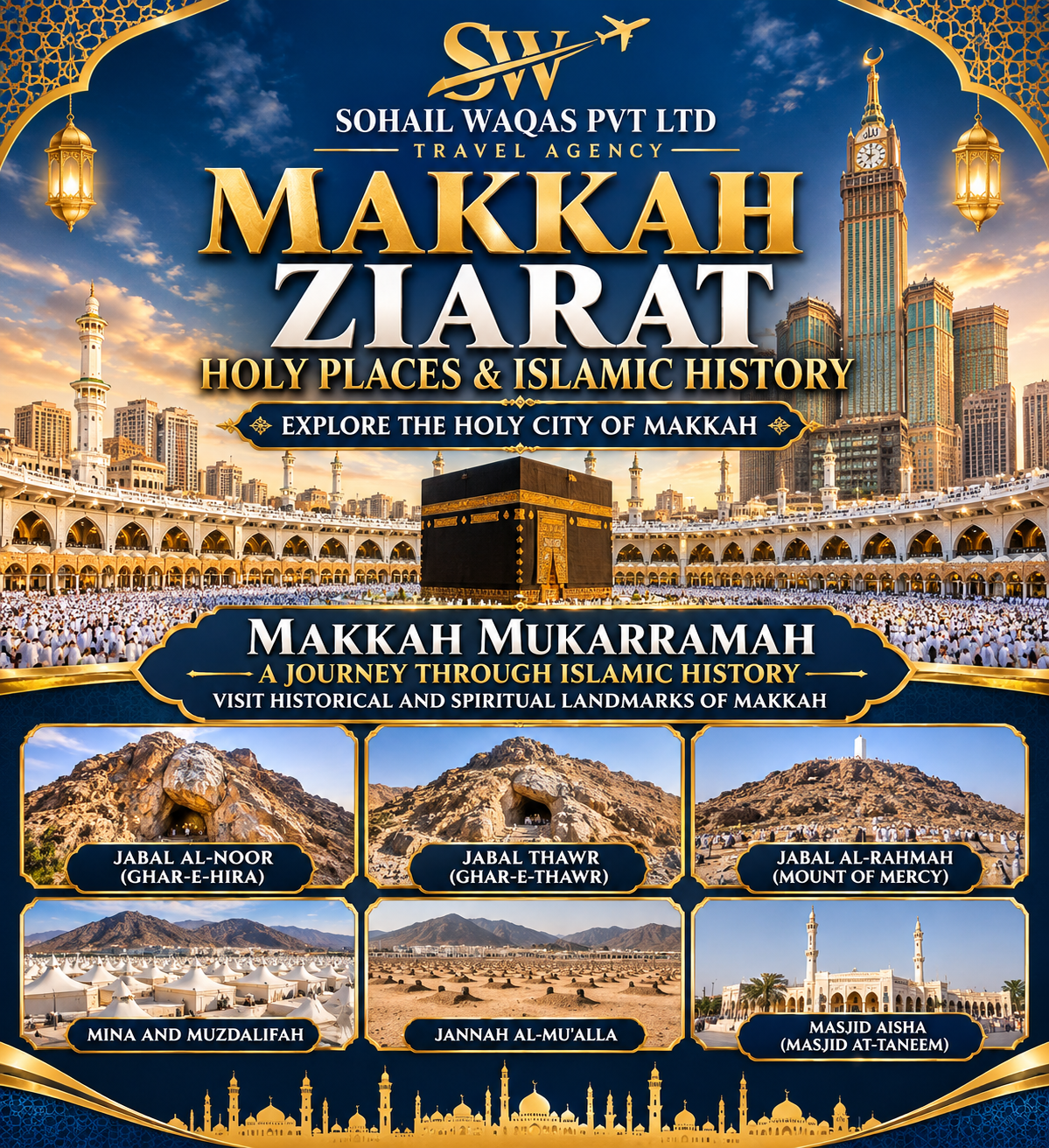
What Is Makkah Ziyarat?
Ziyarat refers to visiting religiously and historically significant places. In Makkah, these locations are closely connected with Islamic history, the early days of Islam, the life of Prophet Muhammad (PBUH), and the history of Hajj.
Pilgrims often include ziyarat in their Umrah or Hajj travel plans to learn more about the events that shaped Islam.
Some places are famous for their historical importance, while others are connected with important acts of worship and the lives of the prophets.
A ziyarat journey may include:
-
Historical mountains and caves.
-
Important locations connected with the early Muslims.
-
Historic mosques.
-
The plains and landmarks associated with Hajj.
-
Places connected with the life of Prophet Muhammad (PBUH).
-
Important Islamic cemeteries and historical areas.
Visiting these places is an opportunity to reflect on Islamic history, remember the sacrifices of early Muslims, and increase your understanding of the Islamic faith.
However, remember that visiting these locations is generally optional. Ziyarat is not a required part of Umrah or Hajj, and pilgrims should follow authentic Islamic teachings when visiting historical sites.
Why Choose Makkah Ziyarat by Car?
Exploring Makkah can be challenging if you don’t know the city or its roads. Some historical locations are spread across different areas, and reaching them using unfamiliar transport arrangements may take extra effort.
Choosing Makkah ziyarat by car can make your journey more organized and comfortable.
Here are some important benefits.
1. Comfortable Travel for Families
Traveling with children, elderly parents, or other family members requires extra care. Walking long distances or changing transportation several times can become tiring.
A private car offers a more comfortable experience. Your family can travel together, carry personal belongings, and take breaks whenever necessary.
This is particularly helpful for pilgrims who have already spent considerable time walking during Tawaf and Sa’i.
2. Flexible Visiting Schedule
Every pilgrim has a different routine. Some people prefer visiting historical places early in the morning, while others want to travel after completing their prayers.
Car transportation offers greater flexibility when planning your visit.
You can discuss your preferred departure time, the places you want to explore, and the time you need at each location.
Keep in mind that road restrictions, traffic, and access rules may affect the final schedule.
3. Convenient for Elderly Pilgrims
Older visitors may find long journeys and frequent transportation changes difficult.
A comfortable vehicle can reduce unnecessary walking between locations. It also makes it easier to organize a journey around the physical needs of elderly family members.
If someone has mobility limitations, discuss these requirements before arranging transportation.
4. Explore Multiple Historical Places
Makkah has many important historical locations. Visiting them individually without a plan can waste valuable time.
With a properly arranged vehicle, you can organize several locations into one journey, depending on traffic conditions and accessibility.
5. Better Group Coordination
Families and groups often prefer traveling together rather than arranging separate transportation.
A planned car journey helps everyone follow the same schedule and remain together throughout the visit.
This is especially useful for visitors traveling with relatives, friends, or fellow Umrah pilgrims.
Top Places to Visit During Makkah Ziyarat
Makkah is home to several locations with deep connections to Islamic history. Below are some of the most popular places pilgrims may wish to include in their ziyarat journey.
1. Jabal al-Noor – The Mountain of Light
Jabal al-Noor is one of the most historically significant mountains near Makkah.
It is famous because of the Cave of Hira, where Prophet Muhammad (PBUH) received the first revelation from Allah through Angel Jibreel (AS).
This event marked the beginning of the revelation of the Holy Quran and the Prophethood of Muhammad (PBUH).
The Cave of Hira is located high on the mountain. Historically, Prophet Muhammad (PBUH) used to spend time in reflection and worship there before receiving the first revelation.
Why do pilgrims visit Jabal al-Noor?
-
To learn about the first revelation.
-
To understand the early history of Islam.
-
To remember the beginning of Prophethood.
-
To appreciate the sacrifices and dedication of Prophet Muhammad (PBUH).
The climb to the cave can be physically demanding. It involves a steep uphill path and many steps.
You don’t need to climb the mountain to appreciate its historical importance. Visitors can view the mountain from suitable accessible areas.
Elderly pilgrims, people with health concerns, and families with small children should carefully consider whether climbing is appropriate.
2. Jabal Thawr – The Mountain of the Cave
Jabal Thawr is another important historical mountain located near Makkah.
It is famous for the Cave of Thawr, where Prophet Muhammad (PBUH) and Abu Bakr (RA) stayed during their migration from Makkah to Madinah.
According to Islamic history, they remained in the cave for three nights while the Quraysh searched for them.
This event is an important reminder of trust in Allah, patience, courage, and faith.
What makes Jabal Thawr special?
-
Its connection with the Hijrah.
-
The remarkable story of Prophet Muhammad (PBUH) and Abu Bakr (RA).
-
Its importance in early Islamic history.
-
The lessons of patience and reliance on Allah.
Like Jabal al-Noor, reaching the cave requires a difficult climb.
Most visitors can appreciate its significance without climbing to the top. If you are traveling with elderly people or young children, viewing the mountain from a suitable location is a practical choice.
3. Jannat al-Mu’alla – The Historic Cemetery
Jannat al-Mu’alla is one of the most famous historical cemeteries in Makkah.
It is located near the Masjid al-Haram area and is associated with several important personalities from early Islamic history.
The cemetery is historically connected with members of the family of Prophet Muhammad (PBUH), including his first wife, Hazrat Khadijah (RA).
Many Muslims visit the area to remember the people who made important contributions during the early days of Islam.
Why is Jannat al-Mu’alla important?
-
It is an important historical Islamic cemetery.
-
It is associated with members of the Prophet’s family.
-
It reminds visitors of the sacrifices of early Muslims.
-
It encourages reflection on life, death, and the Hereafter.
Visitors should maintain proper respect and follow the cemetery’s access rules.
Access arrangements and visiting permissions may change, so check local guidance before planning your visit.
4. Mina – The City of Tents
Mina is an important location for Hajj pilgrims.
It is situated between Makkah and Muzdalifah and is famous for its large tent city, where pilgrims stay during specific days of Hajj.
During Hajj, millions of Muslims gather in Mina to perform important rituals, including the symbolic stoning of the Jamarat.
The area has a deep connection with the annual pilgrimage and the history of Prophet Ibrahim (AS).
Important features of Mina include:
-
The large tent accommodation area.
-
The Jamarat complex.
-
The location of important Hajj rituals.
-
Its connection with the journey of Hajj.
Visiting Mina outside the Hajj season can offer pilgrims an opportunity to understand the layout and importance of this historic area.
However, access restrictions can apply, especially during Hajj. Always follow official instructions and traffic regulations.
5. Muzdalifah – A Significant Hajj Location
Muzdalifah is another important location associated with Hajj.
Pilgrims travel to Muzdalifah after leaving Arafat on the ninth day of Dhul Hijjah.
They spend the night there, perform prayers, and collect small pebbles for the symbolic stoning ritual in Mina.
Muzdalifah is a reminder of unity, patience, simplicity, and obedience to Allah.
Why should pilgrims learn about Muzdalifah?
-
It is an essential location in the Hajj journey.
-
It is associated with an important stage of Hajj.
-
It helps visitors understand the sequence of Hajj rituals.
-
It reflects the simplicity and equality of pilgrims before Allah.
During the Hajj period, access to Muzdalifah is subject to official arrangements and restrictions.
6. Arafat – The Most Important Day of Hajj
Mount Arafat, also known as Jabal al-Rahmah, is one of the most recognized landmarks associated with Hajj.
The plain of Arafat is the location where pilgrims gather on the ninth day of Dhul Hijjah.
Standing at Arafat, known as Wuquf, is a fundamental pillar of Hajj.
Jabal al-Rahmah is particularly famous because of its historical and religious associations.
Many visitors come to learn about the significance of this area and reflect on the importance of repentance, forgiveness, and prayer.
Key reasons to visit Arafat include:
-
Learning about the central stage of Hajj.
-
Understanding the significance of Wuquf.
-
Remembering the teachings of Prophet Muhammad (PBUH).
-
Reflecting on the importance of dua and repentance.
It is important to understand that climbing Jabal al-Rahmah is not a requirement for Hajj.
The essential act is standing within the designated boundaries of Arafat during the prescribed time.
7. Masjid al-Jinn – A Historic Mosque
Masjid al-Jinn is a well-known mosque in Makkah.
It is associated with the Islamic account of a group of jinn listening to the recitation of the Holy Quran and accepting its message.
The event is mentioned in the Quran and is connected with the early history of Islam.
The mosque is an interesting historical stop for visitors who want to learn more about the stories mentioned in Islamic teachings.
Visitors should remember that the spiritual value of a place comes from authentic Islamic teachings rather than unsupported stories or claims.
8. Masjid al-Taneem – Masjid Aisha (RA)
Masjid al-Taneem is one of the well-known mosques outside the Haram boundary.
It is also commonly called Masjid Aisha (RA), because Hazrat Aisha (RA) entered Ihram for Umrah from this area after the Farewell Hajj.
Today, it is an important location for pilgrims who need to enter Ihram for another Umrah.
Many visitors travel to this mosque as part of their ziyarat journey.
Important points about Masjid al-Taneem:
-
It is located outside the Haram boundary.
-
It is associated with Hazrat Aisha (RA).
-
Pilgrims may use it as a Miqat location for entering Ihram for Umrah.
-
It is a popular stop during Makkah ziyarat.
If you intend to perform another Umrah, make sure you understand the correct Ihram requirements and seek reliable religious guidance when needed.
9. Masjid al-Hudaybiyyah – A Place of Historic Significance
Hudaybiyyah is an important location in Islamic history.
It is famous for the Treaty of Hudaybiyyah, an agreement between Prophet Muhammad (PBUH) and the Quraysh of Makkah.
The treaty took place in the sixth year after Hijrah and became a major turning point in the history of Islam.
Although the agreement appeared difficult for some Muslims at the time, it eventually opened the way for important developments in the spread of Islam.
Visiting this historical area helps pilgrims understand:
-
The wisdom of peaceful agreements.
-
The importance of patience.
-
The leadership of Prophet Muhammad (PBUH).
-
The historical development of Islam.
The precise condition and accessibility of historical structures in the area can vary, so follow local directions.
10. Masjid al-Bay’ah – A Historic Islamic Landmark
Masjid al-Bay’ah is associated with the pledges of Aqabah.
These pledges were important events in the early history of Islam. They involved people from Yathrib, later known as Madinah, who pledged their support to Prophet Muhammad (PBUH).
These events helped prepare the way for the Hijrah and the establishment of the Muslim community in Madinah.
The mosque is an interesting destination for people who want to learn more about the early development of the Muslim community.
11. The Birthplace Area of Prophet Muhammad (PBUH)
The historical area traditionally associated with the birthplace of Prophet Muhammad (PBUH) is another location of interest for visitors.
The area is commonly associated with the Banu Hashim neighborhood in Makkah.
Over time, the surrounding area has changed significantly because of urban development.
Visitors should understand that historical identification and access to particular structures may vary. Follow local regulations and avoid treating modern buildings as religious sites without reliable historical evidence.
Learning about the birthplace and early life of Prophet Muhammad (PBUH) can help visitors understand the background of his mission.
Important Makkah Ziyarat Places at a Glance
The following table provides a quick overview of the major locations discussed above.
| Ziyarat Place | Historical Importance |
|---|---|
| Jabal al-Noor | Cave of Hira and first revelation |
| Jabal Thawr | Cave connected with Hijrah |
| Jannat al-Mu’alla | Historic Islamic cemetery |
| Mina | Important Hajj rituals |
| Muzdalifah | Night stay during Hajj |
| Arafat | Wuquf during Hajj |
| Masjid al-Jinn | Historical account of jinn listening to the Quran |
| Masjid al-Taneem | Associated with Hazrat Aisha (RA) |
| Hudaybiyyah | Historic peace treaty |
| Masjid al-Bay’ah | Pledges of Aqabah |
How to Plan Your Makkah Ziyarat by Car
A successful ziyarat journey starts with good planning.
You don’t need a complicated schedule. A simple plan based on your available time, physical comfort, and preferred locations can make the experience much easier.
Here is a practical step-by-step guide.
Step 1: Decide Which Places You Want to Visit
Start by making a list of the historical places that interest you.
If you’re visiting Makkah for the first time, you may want to include:
-
Jabal al-Noor.
-
Jabal Thawr.
-
Jannat al-Mu’alla.
-
Mina.
-
Muzdalifah.
-
Arafat.
-
Masjid al-Jinn.
-
Masjid al-Taneem.
You don’t necessarily need to visit every location in one trip.
Choose the places according to your available time and physical ability.
Step 2: Select a Suitable Visiting Time
The timing of your journey can make a big difference.
Early morning is often a practical option because temperatures may be more comfortable, especially during warmer months.
However, road traffic, prayer times, seasonal restrictions, and site access can affect your schedule.
Before departure, confirm the local conditions and choose a suitable time with your transportation provider.
Step 3: Arrange Comfortable Transportation
Choose a vehicle that suits your group size.
If you’re traveling with elderly parents or children, consider comfort and easy entry and exit.
Before starting the journey, discuss:
-
Your pickup location.
-
Your preferred departure time.
-
The places you want to visit.
-
The number of passengers.
-
Any mobility requirements.
-
Expected visiting duration.
Clear communication helps prevent confusion during the trip.
Step 4: Prepare Essential Items
Although most ziyarat journeys are not extremely long, carrying a few basic items can make your visit more comfortable.
Consider taking:
-
Drinking water.
-
Comfortable walking shoes.
-
A mobile phone.
-
A fully charged power bank.
-
Sun protection.
-
Necessary personal medication.
-
Identification documents.
-
A small bag for personal belongings.
Keep your belongings organized so you don’t have to search for them at every stop.
Step 5: Follow Local Rules and Instructions
Some historical locations have restricted access or specific visiting arrangements.
This is especially relevant during Hajj season and other busy periods.
Always follow traffic instructions, security guidance, and official announcements.
Your transportation provider should also be aware of current road conditions and permitted routes.
Step 6: Keep Enough Time for Prayer and Rest
Don’t make your itinerary too busy.
Pilgrims often underestimate how tiring travel can be after performing Umrah.
Allow time for prayer, meals, rest, and unexpected delays.
A relaxed journey is usually more enjoyable than trying to visit every possible location in a limited period.
Suggested Makkah Ziyarat Itinerary
If you want to visit several historical places in one journey, you can discuss a route based on the following general plan.
The final order should depend on your hotel location, traffic, current road access, and local restrictions.
First: Begin with the historical mountains
-
Jabal al-Noor.
-
Jabal Thawr.
These two locations are associated with important events in the life of Prophet Muhammad (PBUH).
Remember that climbing either mountain is optional and physically demanding.
Second: Explore the Hajj-related locations
-
Mina.
-
Muzdalifah.
-
Arafat.
-
Jabal al-Rahmah.
These places help visitors understand the major stages of the Hajj pilgrimage.
Third: Visit important mosques and historical areas
-
Masjid al-Jinn.
-
Masjid al-Taneem.
-
Masjid al-Bay’ah.
-
Hudaybiyyah, where access and travel arrangements permit.
Fourth: Visit Jannat al-Mu’alla
If access is permitted, include this historic cemetery in your journey.
Allow time to follow the local visiting instructions and maintain proper respect.
This itinerary is flexible. You can divide the locations into separate visits if you prefer a slower and more comfortable experience.
Best Time for Makkah Ziyarat
Makkah can be visited throughout the year, but weather conditions and crowd levels can affect your experience.
Choosing the right time depends on your personal schedule and the type of journey you prefer.
Early Morning
Early morning can be a comfortable time for visiting outdoor locations.
Advantages include:
-
Potentially cooler weather.
-
More comfortable outdoor conditions.
-
A good opportunity to complete several stops.
-
More time for rest later in the day.
After Sunrise
Some pilgrims prefer starting after sunrise.
This allows them to complete their morning prayers and prepare for the journey without rushing.
It can also be a suitable choice for families who need additional preparation time.
During the Cooler Months
The cooler months can make outdoor visits more comfortable.
However, Makkah may still experience significant visitor activity during popular Umrah periods.
Always check the weather before visiting mountain areas.
During Hajj Season
Hajj season requires special attention.
Several locations, including Mina, Muzdalifah, and Arafat, may have strict access controls.
Private vehicles may not be allowed into certain areas, and transport arrangements can be different from those used during the rest of the year.
Never assume that a regular ziyarat route will remain available during Hajj.
Follow official Saudi authorities’ instructions.
Important Tips for a Comfortable Ziyarat Journey
A little preparation can make your experience much more enjoyable.
Here are some practical suggestions.
Wear Comfortable Clothing
Choose modest and comfortable clothing suitable for the weather.
If your itinerary includes outdoor areas, wear appropriate walking shoes.
Avoid footwear that may cause discomfort during extended walking.
Carry Drinking Water
Makkah can become very hot, particularly during summer.
Carry drinking water and take regular breaks.
Avoid unnecessary physical activity during the hottest part of the day.
Respect Historical and Religious Places
Every location should be treated with respect.
Avoid loud conversations, littering, or any behavior that may disturb other visitors.
Follow the rules of mosques, cemeteries, and other religious locations.
Don’t Rush Your Visits
A ziyarat journey is not a race.
Take time to understand the history of each place.
If you are traveling with elderly family members, allow additional time for walking and rest.
Learn About the Historical Background
Reading about a location before visiting can make the experience more meaningful.
For example, learning about the Hijrah before visiting Jabal Thawr helps you understand the historical importance of the cave.
Similarly, understanding the first revelation makes a visit to Jabal al-Noor more memorable.
Keep Your Group Together
If you’re traveling with family or a larger group, agree on meeting points.
Keep children close and ensure elderly members have assistance when needed.
Check Accessibility Before Departure
Not every historical location offers easy access.
Some areas may require walking, while others may have restricted visiting arrangements.
Confirm the latest conditions before setting out.
Common Mistakes to Avoid During Makkah Ziyarat
Even a well-planned trip can become difficult if you overlook a few important details.
Avoid these common mistakes.
1. Trying to Visit Too Many Places
Visiting every historical location in one journey may be exhausting.
Choose the places that matter most to you and allow enough time at each stop.
2. Ignoring the Weather
Outdoor visits during extreme heat can be uncomfortable and potentially dangerous.
Check the weather and carry water.
3. Forgetting About Prayer Times
Plan your journey around your daily prayers.
Don’t schedule your visits so tightly that you struggle to find time for worship.
4. Assuming Every Location Is Always Accessible
Some places may have restrictions, especially during busy seasons.
Confirm access before departure.
5. Climbing Mountains Without Preparation
Jabal al-Noor and Jabal Thawr involve steep climbs.
Don’t attempt these climbs without considering your fitness, health, and weather conditions.
6. Depending on Unverified Historical Stories
Not every story shared by visitors or guides is authentic.
Learn about historical locations through reliable Islamic sources and avoid unsupported religious claims.
7. Not Communicating Your Requirements
If you need a particular pickup point, extra time, or assistance for an elderly family member, communicate these requirements before the journey begins.
Good planning makes the experience easier for everyone.
Is Private Car Transportation Suitable for Families and Groups?
Yes, private car transportation can be a practical choice for many families and small groups.
It offers a more organized way to travel between historical locations without repeatedly arranging separate transport.
Consider these situations:
Families with children: Traveling together can make group coordination easier.
Elderly pilgrims: A vehicle can reduce unnecessary walking between locations.
First-time visitors: A planned journey can help you understand the city and visit important places in an organized way.
Small groups: Traveling together can make the experience more convenient.
Visitors with limited time: A planned route can help you use your available time more effectively.
Before arranging transportation, confirm the vehicle’s passenger capacity and make sure it meets your group’s needs.
Makkah Ziyarat by Car vs. Walking
Both walking and car transportation have their own advantages.
The best option depends on the distance, weather, physical ability, and location you want to visit.
| Feature | Car Transportation | Walking |
|---|---|---|
| Comfort | More convenient for longer journeys | Can be tiring over long distances |
| Elderly visitors | Often more suitable | May require additional effort |
| Families | Easier group coordination | Requires more planning |
| Distance | Suitable for locations spread across the city | Best for nearby locations |
| Flexibility | Allows organized travel between stops | Depends on walking routes |
| Physical effort | Less walking between locations | More physical activity |
For most visitors exploring multiple locations across Makkah, car transportation can be a convenient option.
However, some areas may still require walking after you leave the vehicle.
Important Islamic Guidelines for Ziyarat
While visiting historical places, it’s important to remember the purpose of the journey.
Ziyarat should increase your understanding of Islamic history and encourage you to remember Allah.
Keep the following guidelines in mind:
-
Maintain respect at every religious and historical location.
-
Follow authentic Islamic teachings.
-
Avoid making dua to graves or asking deceased people for help.
-
Make dua directly to Allah.
-
Do not believe that visiting a particular historical location is compulsory for Umrah.
-
Avoid unsupported claims about special rewards for visiting certain places.
-
Follow the instructions of local authorities.
-
Respect other pilgrims and visitors.
The main purpose of your journey should always be worship, learning, and reflection.
How to Choose a Reliable Makkah Ziyarat Car Service
Choosing the right transportation arrangement can make a major difference to your experience.
Before confirming your journey, consider the following points.
1. Clear Communication
A good transportation provider should understand your requirements.
Explain your pickup point, destination list, group size, and preferred schedule.
2. Suitable Vehicle
Make sure the vehicle has enough passenger seats and luggage space.
Comfort is particularly important if you are traveling with children or elderly family members.
3. Knowledge of Local Routes
Makkah has busy roads, seasonal restrictions, and areas with special access arrangements.
A transportation provider familiar with local routes can help organize a more practical journey.
4. Punctual Pickup
Timely pickup helps you follow your planned schedule.
Confirm your pickup location and time before the journey.
5. Understanding of Your Itinerary
Share your preferred ziyarat locations in advance.
This allows the transportation provider to understand your travel requirements and discuss an appropriate route.
6. Safety and Cleanliness
Choose transportation that is suitable for your group and maintained properly.
Ensure that seat belts are available and follow all road safety requirements.
Making Your Makkah Journey More Meaningful
A ziyarat journey is about more than traveling from one location to another.
Each historical place provides an opportunity to learn something about the history of Islam.
When you visit Jabal al-Noor, remember the beginning of Quranic revelation.
When you learn about Jabal Thawr, reflect on the courage and trust in Allah shown during the Hijrah.
When you visit Arafat, remember the importance of Hajj and the lessons of humility and repentance.
When you explore Mina and Muzdalifah, think about the unity of Muslims from different countries and backgrounds.
These reflections can help turn an ordinary sightseeing journey into a meaningful educational and spiritual experience.
If you’re traveling with children, explain the historical background of each place in simple words. It can help them develop a deeper understanding of Islamic history.
You can also read short accounts of important events together before visiting each destination.
This approach makes the journey more valuable for the entire family.
https://www.haramainrenter.com/makkah-ziyarat-by-car-explore-holy-places-easily/
Frequently Asked Questions About Makkah Ziyarat
1. What are the most famous places to visit during Makkah ziyarat by car?
Some of the most popular places include Jabal al-Noor, Jabal Thawr, Mina, Muzdalifah, Arafat, Jannat al-Mu’alla, Masjid al-Jinn, Masjid al-Taneem, and the historical area of Hudaybiyyah. The final route depends on your available time and current access restrictions.
2. How long does a Makkah ziyarat journey take?
The duration depends on the number of locations, traffic conditions, weather, and time spent at each stop. A shorter journey may cover selected locations, while a more extensive visit may require additional time or separate trips.
3. Is Makkah ziyarat necessary for performing Umrah?
No. Visiting historical places in Makkah is not a compulsory part of Umrah. The essential Umrah rituals are Ihram, Tawaf, Sa’i, and shaving or trimming the hair according to the applicable rules. Ziyarat is an optional activity for learning about Islamic history.
4. Can elderly people visit Makkah historical places by car?
Yes, car transportation can make travel between locations more convenient for elderly visitors. However, some places involve walking or climbing. Jabal al-Noor and Jabal Thawr, for example, require demanding uphill walks to reach their caves.
5. What is the best time to visit Makkah ziyarat places?
Early morning is often a practical choice, especially for outdoor locations. Cooler weather can make visits more comfortable. However, always consider prayer times, road conditions, traffic, and seasonal access restrictions.
6. Can families visit all the major Makkah ziyarat places in one trip?
It may be possible to visit several major locations in one organized journey, depending on the route and available time. However, families with children or elderly members may prefer dividing the visit into separate trips to avoid unnecessary tiredness.
4. Contact Details – Makkah Ziyarat by Car
Planning to explore the historical and religious places of Makkah? Arrange your transportation in advance and discuss your preferred ziyarat locations, pickup point, and travel requirements.
For inquiries and transportation arrangements, contact:
M. Waqas Siddique
Phone: +92 303 5655552
M. Sohail Siddique
Phone: +92 334 2777123
Make your visit to Makkah more organized and comfortable with a well-planned ziyarat journey. Contact us to discuss your transportation requirements and plan your visit to the historical places of the Holy City.
May Allah accept your Umrah, prayers, and good deeds, and grant you a blessed journey. Ameen.